Friday, July 02, 2010

Why Do We Care About Football?

Book Review
Chuck Korr and Marvin Close, More than Just a Game: Football v Apartheid, Collins, London, 2008.


Most people are familiar with the famous line by one of those Pommy Soccernumaries, "Some people say that football is a matter of life and death. I'm very disappointed with this view. Football is much more important than that." A more obscure line comes from this book, from Indres Naidoo, imprisoned on Robben Island for many years and now a member of South Africa'a Parliament: "... we knew that sports is much too important to be just fun."

What do we do with lines like this? Of course the already converted know deep down that they're dead right, and say "Oh yeah!" but nobody can blame the unconverted for thinking that they're sheer nonsense. How can we say such things?

More that just a Game is a history of a football league, but it starts with a time when the prisoners on Robben Island (this is the place Nelson Mandela was incarcerated incidentally) were not allowed to play any sport at all. The opening chapters were my own first real introduction to the history of apartheid itself, the horrible repression that occurred and the barbaric, sickening conditions on the Island itself. And even for this I found the book valuable.

Of all things for the prisoners to lobby for - suffering beatings and periods of confinement and starvation to do so, over several years - the ability to play football was front and center. And they did not merely want to be given a ball to kick-about with. They wanted a League, and bit by bit, with meticulous organisation, and helped by outside pressures, they got it.

What is really astounding is this level of organisation. They drafted a constitution, had nine clubs at the peak, three divisions, rules for transfers, appeals processes and committees and a referees union. The thing that got the authors of the book going was the voluminous documentation of the whole thing, all handwritten but all in formal, legalese tone. Most of this, meanwhile, was done completely behind the prison authority's backs.

So while the sporting may have helped the prisoners' spirits and fitness, it was the organisation itself that educated the prisoners in skills that they now are using to run the country. Surprising and fascinating stuff all.

The book is not some side-story by football fans. It is real history, researched and written by historians, about a story which, if not told, would leave a real gap in accounts of the overthrow of apartheid. There is no exageration here as far as I can see, and it's not all flattering, as in the account of the 'Atlantic Raiders Affair' which is essentially a long-winded legal battle between typically self-righteous athletes over a referee decision. Even in the latter case, we see prisoners develop real skills of advocacy and argument, which would later serve them in struggle and in running the country.

Football on the island led to other sports of course, and we witness a version of the absurd tension between football codes that we are familiar with in Australia. Fortunately they come to the conclusion that the important thing is sport, and in my view Australian football codes would do well to learn parallel lessons - that the modern enemies of soccer are not rugby and AFL but apathy, bad nutrition, poor health, inadequate parkland and computer games. Anyway I digress.

I thoroughly enjoyed this read and it taught me a lot about this strange, brave country.

So what's the answer to the question? Why is football, which let's face it is an arbitrary human contrivance with no real stakes, so important? Somewhere in the midst of reading this book I came up with an answer, and it's about freedom.

Those of us who believe in a religion do so because we feel obliged to. We must. We might believe in ideals or political causes because we see them as necessary. But we believe in football because we can, because we are free to. Millions are, of course (as were some on the Island) equally free to not give a shit about football and that doesn't matter a jot. But those of us who do, believe in it because we are free. It is a highly social, organised, universal, articulated expression of human freedom.

Incidentally, 1GOAL is less than 200,000 off the 10,000,000 mark. If you haven't signed up (costs nothing), think seriously about it. Education for all is a very worthy goal, and I believe in it because it is essential for the furtherance of human civilisation.

Labels: ,

Thursday, June 03, 2010

Reading

With six sleeps to go before Jacob and I leave on our historic and sacerdotal witness, I thought I may not be the only one wondering what to read on the plane. Each of these three books is Australian. Each is aimed at an extremely different audience. Each has as a common theme the most beautiful game yet devised, a game that has become the most universal language and religion, the crowning cultural artifact of human civilisation to this date. Three new soccer books.

Paul Connolly, The Mighty Bras: A Suburban Football Story with Balls/Intestinal Fortitude, Affirm Press, Victoria, 2010.

For a plane trip to Johannesburg, straight up, this is my highest recommendation. If reading is how you pass the hours, you'll probably finish it (190 pages), and it will only have done lovely things to your state of mind for your arrival.

The Mighty Bras is a biography of an amateur women's soccer team in Melbourne written by its coach. Sound indulgent? Gloriously so. The characters are brought alive with great humour and empathy, and everything about the read is fun. I laughed out loud frequently. It might have helped that the team reminded me often of Dawn's team, The West End Partisans, although the Bras do eventually win some games. (Dawn is my long-suffering fiance.)

Adrian Deans, Mr Cleansheets, Vulgar Press, Victoria, 2010.

My fantasy: a 40 year old goal keeper from Australia gets a trial with Manchester United. How the author keeps this believeable (just) is the real mystery. This is a read for a popular audience, but at 525 pages will take a few plane trips and you might want to start it before you head off. I couldn't put the bloody thing down and it kept me up for a few nights. Football, sex, violence, crime, intrigue, juicy characters and an underlying comedy of plot without any of it being a comedy. It's like the author dares you to drop your suspension of disbelief, deftly maintaining your interest as you repress, page after page, the urge to laugh at what must be his ultra-dry absurdist sense of humour. I can say no more without spoiling the journey. For me it was a hoot.

Craig Foster, Fozz on Football, Hardie Grant Books, Victoria, 2010.

Now Craig Foster is a freak. I mean it, and I am an authority. The man has a unique mental condition, a cross between Anthony Green (replacing political data with soccer data), Billy Graham (replacing black n white religious evangelism with black n white soccer evangelism) and Timothy Leary (replacing drug euphoria with soccer euphoria).

I must immediately point out that Craig would never use the word 'soccer' as loosely as I am doing so for it is the wrong word. AFL for him is not 'football' at all, despite the fact, easily verifiable, that everyone calls it that. I've written about this absurdity elsewhere (ok, twice) so I won't go on about that. Suffice to say that I couldn't care less what you call the game and that 'soccer' seems a useful term in a media environment with multiple football codes.

Anyway the first four or five chapters were hilarious for their relentless polemical passion, replete with exageration, hyperbole, the rampant overuse of superlatives, blind contradiction and a happy smattering of fascinating football anecdotes that you would be better off picking up from Simon Kuper's excellent books. The chapters are really short essays of five or six pages each, which made it an excellent bedside book, but honestly, I nearly put it down and reviewed it as crap without continuing.

I'm very glad I didn't do that.

To get the unique gift that Craig Foster has to offer you have to see past Timothy Leary and Billy Graham and get to Anthony Green. It's when Foster got to his detailed raves about what good football is that I started concentrating because I realised I was learning a lot very quickly. His essays on the system, on space, on speed, on the touch each show us things we can watch for, ways we can watch the game. It's no secret that the intricacies of the soccer game fascinate the eff out of me, and Fozzie describes each aspect with the deeply considered understanding that only an obsessive nutjob can truly attain.

Anyway the book is still by my bed and I'm only half way through it. I do need something for the plane you know?

All of these books seem to be available in regular bookshops, but I don't have them in my own bookshop, because it's second hand. There's not many soccer books in my bookshop unfortunately (Archives Fine Books, 40 Charlotte St, Brisbane), because I've hoarded them all.

Labels: ,

Sunday, July 01, 2007

My Football Library

This page will be regularly updated and linked from the side-bar. Feel free to make recommendations in comments. Last update 15 November 2007.

I've always been a bibliophile, and whatever I've gotten into, I collect books about it. In less than twelve months I've accumulated some great books about the beautiful game, read many of them, reviewed a couple, and been recommended others by the blogging community. This page is a record of that library. It also links reviews of my own and other bloggers.

Footballers' Biography

David Beckham, My Side, CollinsWillow, London, 2003. First Edition hardback 404 pages. Autobiography of Beckham. I haven't read it and might get around to it some day.

Billy Bingham, Soccer With the Stars, Stanley Paul, London, 1962. First edition hardback (with damaged dustjacket) 192 pages. I haven't yet read this autobiography of this colourful sounding Irish footballer.

John Charles, King John, Headline Book Publishing, 2003. First edition hardback with dustjacket 277 pages. Unread, but this is one I certainly will get to. Sounds like an extraordinary man as well as footballer.

Paul Gascoigne, Being Gazza - My Journey to Hell and Back, Headline, London, 2006. First edition paperback 289 pages. I've already read one book about Gazza (Ian Hamilton's Gazza Italia below), and although everyone says he's brilliant and a character he's not my greatest interest. Basically if I see a soccer book I haven't got at a seconds sale I buy it, and this is in that category. It focuses on Gascoigne's drug and mental problems, which along with Jimmy Greaves' This One's On Me (below), seems to be a sub-genre in itself - "The sordid perils of soccer fame" or something. John made a personal recommendation of this to me recently, especially with an interest in a type of genius player who is actually suffering from mental problems - and there may be quite a few.

Ray Gatt, The Rale Rasic Story as told to Ray Gatt, New Holland Publishers, Sydney, 2006. First edition paperback 224 pages. I read this with great interest and frankly I don't think Rasic's story can be ignored. He essentially paints himself as a victim of 'old soccer' and he may have a point. Hell, the man was the first coach to lead the Socceroos to a World Cup, and despite the more recent and greater success of Guus Hidink, it would be a horrible injustice to discount him. Entertainingly written as well. Mike adds below, "Some interesting stuff, especially now that I've seen some of the 1974 games, but Rale's not exactly the most modest. That aspect put me off after a while."

Ryan Giggs with Joe Lovejoy, Giggs - The Autobiography, Penguin, London, 2005. Paperback 394 pages. It came into the shop and I bought it.

Jimmy Greaves, This One's on Me, Coronet Books, 1980. Paperback 176 pages. A journey through the glory and the alcoholism of one of England's great goal scorers. An unusual choice perhaps, but one of the first football biographies I read. Reviewed on Football Down Under.

Ian Hamilton, Gazza Italia, Granta Books, London, 1994 (first 1993). Paperback 188 pages. Let's call this biographical fan literature about Paul Gascoigne. The perspective of a self-consciously besotted fan. Lots of fun. Amongst my limited reading this book seems to foresee the fan-lit genre properly opened by Hornby's Fever Pitch and exemplified by Haner's Soccerhead. It's a very authentic style and one other fans can easily relate to.

Harry Harris, Ruud Gullit: The Chelsea Diary, Orion, London, 1998. Paperback 435 pages. It came into the shop OK. I don't even like Chelsea.

Roy Keane, Keane - The Autobiography, Penguin, 2003. Paperback 321 pages. Bio of the brilliant Irish maverick. I learned a lot about football, especially with regard to club-management issues, from this book.

Colin Malam, Gary Lineker - Strikingly Different, Arrow, London, 1993 (first by Stanley Paul & Co Ltd in 1993). Paperback 219 pages. Biography of Lineker. I haven't even read the Foreword by Bobby Charlton.

Diego Maradona, El Diego, Yellow Jersey Press, London, 2005. Paperback 302 pages. The biography of a great and complex football genius. Read with great pleasure and fascination. Neil reviewed this over at Victory in Melbourne.

Paul McGrath, back from the Brink, Arrow Books, London, 2006. Paperback 419 pages. Came into the shop and I bought it.

Martin Meijer, Guus Hiddink - Going Dutch, Random House Australia, Sydney, 2006. First (no doubt only) edition paperback 260 pages. Read the first couple of chapters of this biography and I'll certainly read it for interest but frankly this looks like a fairly cheap bit of cash-in writing. It doesn't have an index for one thing, which always disgusts me in non-fiction and is a sure sign of cheap, hasty publishing.

Pele, The Autobiography, Simon and Schuster, London, 2006. Paperback 357 pages. Great read. Very candid until toward the end where I think Pele is not capable of being entirely frank due to his current career. An amazing story nevertheless.

Neil Ruddock, Hell Razor, CollinsWillow, London, 1999. First edition hardback with dustjacket 256 pages. Autobiography of Ruddock. Nice looking book, but I'm yet to read it.

Terry Venables and Neil Hanson, Venables - The Autobiography, Penguin, 1995. Paperback 467 pages. Purchased a few weeks ago and haven't got to it yet.

Johnny Warren, Sheilas, Wogs and Poofters - An Incomplete Biography of Johhny Warren and Soccer in Australia, Random House, 2003. The essential backgrounder to new football fans in Australia. Reviewed on Football Down Under.

Tactics and Coaching

Eric Batty (ed), Soccer Coaching the European Way, Souvenir Press, London 1980. First Edition Hardback with dustjacket 240 pages. I've read a few selected chapters of this and thought it was interesting. It's impossible for me not to learn a lot about watching games and playing myself when I read about coaching techniques. I'll pick it up and read another selection from time to time.

David Brenner, Soccer Tactics, Albany Books, London, 1979. Paperback 127 pages. Read this with the encouragement of the author (below). Overviews tactical styles in a simple, helpful way.

Brandi Chastain, It's Not About the Bra - How to Play Hard, Play Fair and Put the Fun Back into Competitive Sports. According to Haner's Soccerhead, it was the moment that Chastain took her shirt off when USA beat China in the 1999 Women's World Cup, celebrating with her sports' bra in full glory, that the USA really went soccer mad. Like Mia Hamm's book this is part biography, part self-help and part coaching. It's also directed pretty directly at parents of junior players, and young players themselves. Touching, inspiring stuff. I recommend it.

Pierluigi Collina, The Rules of the Game, Pan Books, London, 2004 (first 2003). Paperback 210 pages. First brought to my attention by John - "An autobiography by a world cup ref - ie how he feels when the crowd boos him etc." A very simple style disguises a rich relationship with the game and the world of refereeing. My knowledge of reffing grew by about 500% in the space of reading this book, not just in the practice but in the process of progressing, getting games, reviewing performances and the like, all of which is clearly very sophisticated in Italy. For anyone interested in the improvement of refereeing in Australia, I reckon this is a crucial reference.

F.N.S. Creek, Soccer, Brockhampton Press, 1972 (first 1968). Hardback 92 pages. Part of the 'Illustrated Teach Yourself' series. I have barely looked at this book.

George Eastham (ed), Soccer Science, Pelham Books, London, 1966. First edition hardback (no dustjacket) 128 pages. I've read only selected chapters so far but this is great historical stuff. The thrust is pretty modern, emphasising drills for ball control. Chapters on positions including goalkeeper, fitness, heading, shooting and the Laws of the Game.

Mia Hamm, Go for the Goal - A Champion's Guide to Winning in Soccer and Life, Quill, New York, 2000 (first 1999). Paperback 255 pages. I've read the first chapter and although the title suggests a self-help type book, it is within the rubric of autobiography, and also has a great deal of systematic technical and coaching advice, directed at juniors and newbies. As readers of my blog know, I've become fascinated by the possibilities of women's soccer, and this was the first women's soccer book I read. It is also one of the most readable soccer books I've read, and so practical that I would heartily recommend it to any player over 12. Actually I've lent it out and expect to do so repeatedly.

Harry Harris and Mike Varney, The Treatment of Football Injuries, MacDonald and Jane's Publishers, London, 1977. I do mean to give this a decent read but probably won't get round to it. Despite its age, a flip through reveals that not much has changed and the advice, directed largely at amateurs who find themselves in situations before an actual doctor can get involved, is probably still very good.

Ken Jones, Soccer - A Step by Step Guide to Skills and Tactics, Hamlyn, London, 1984. Paperback 64 pages. A brief and simple overview of the fundaments of the game, with black and white photography.

Jim Kelly, On the Ball, Illawarra Daily Mercury, Wollongong, 1962. A proud acquisition. A very scrappy looking paperback, bound with staples through the spine, this is a very rare item. Jim Kelly was a star English player who spurned offers in order to migrate to Australia, where he continued playing and coaching. The rationale for the book is that when he arrived in Australia Jim had so many requests to coach teams, junior and senior, that he felt obliged to write down his thoughts for the improvement of coaches in general. It's an organised coaching manual.

Michael Muckian with Dean Duerst, The Complete Idiot's Guide to Coaching Youth Soccer, Alpha, 2003. Paperback 268 pages. This is from an American perspective, but it is pretty up to date and I've found it helpful.

Horst Wein, Developing Youth Soccer Players, Human Kinetics, 2001. Large paperback 216 pages. This is the text I got when I did a junior coaching course early this year. Clear and up-to-date, it has been my main source for getting youth coaching ideas.

Soccer History

Alex Bellos, Futebol - the Brazilian Way of Life, Bloomsbury, London, 2003. Paperback 420 pages. This one really is a cracker. I can't remember if it was well written or not because the content was so compelling and extraordinary in itself. If football fans in Australia and America dream of a world where soccer is the true and proper religion, then they can read about those living the dream.

Michael Crick and David Smith, Manchester United - The Betrayal of a Legend, Pan, London, 1990 (first 1989). Paperback 344 pages. A critical history very much from the dedicated fan's point of view. Obviously out of date but a very good backgrounder nevertheless of this great club. I'm half way through but will get back to it.

Andy Dougan, Dynamo - Defending the Honour of Kiev, Fourth Estate, London, 2002 (first 2001). Paperback 244 pages. As much a Nazi occupation history of Kiev and the Ukraine than a football book, but the through narrative is the Kiev soccer scene and in particular a group of players known as Kiev Start who defeated every team, including a team of German pilots and soldiers twice, after which they were imprisoned and four of them killed. A corrective (apparently) to Kupers' account of the same game. According to Dougan this is the spiritual foundation of the current FC Dynamo Kiev team. I heartily recommend this to anyone, whether soccer fan or not.

Derek Dougan and Patrick Murphy, Matches of the Day 1958-83, J.M. Dent & Sons, London, 1984. First (probably only) edition hardback with dustjacket. I think I'll savour this in parts when I get to it. A review of 25 games over the said period which the authors felt, "stand out as having an impact way beyond the result on that day."

Arthur E Ellis, Refereeing Around the World, Hutchinson, London, 1954. First edition hardback without dustjacket 196 pages. This one looks interesting. Looks part autobiography of an apparently great referee and partly a book about refereeing (in the post-war game). Very pleased with this score and looking forward to looking at it more closely.

Franklin Foer, How Soccer Explains The World - An Unlikely Theory of Globalization. I discovered this on the net and had to have it. Described as a good companion to Kuper's Football Against the Enemy. Wayne recommends, "a good angle to come into world football from communally wise." I've read a bit over half of this and, in discrete sections about diverse parts of the world, I'll get through it as I use it for railway reading occasionally. Great stuff so far.

Simon Freeman, Baghdad FC - Iraq's Football Story, John Murray, London, 2006 (first 2005). Paperback 240 pages. I devoured this as soon as I bought it a few weeks ago. I always am fascinated by the interface between soccer and politics, and this book covers football in Iraq during the Saddam era and beyond. Important context for the recent Iraqi win, but frankly not well written. It reads like badly organised journalist's notes.

David Goldblatt, The Ball is Round - A Global History of Football, Viking, 2006. First edition hardback with dustjacket 978 pages. I'm through the opening chapters of this tome and it's got me - the most serious and scholarly attempt to describe soccer's early history I've read. I can already say confidently that this is a very important book, though if I ever review it I have a couple of scholastic type criticisms. Current (very occasional, usually bedtime) reading.

Andy Harper, The Socceroos - Voodoo to Destiny, Limelight Press, Sydney 2006. First (only, no doubt) edition paperback 365 pages. Based on interviews with players. I do want to read this, even if it is a cheap bit of cashing-in without an index, but I can't see myself getting around to it soon.

Robert Jeffery, with Mark Gonnella, Pictorial History of English Football, Parragon, London, 2001 (Updated Edition, first 1998). Hardback 256 pages. Looks great from a bit of a peruse, but I haven't got into this yet.

Andrew Jennings, Foul! The Secret World of FIFA: Bribes, Vote Rigging and Ticket Scandals, HarperSport, London 2006. Paperback 286 pages. I reviewed this on Football Down Under, and Mike also reviewed it over at The Football Tragic.

Simon Kuper, Football Against the Enemy, Orion, London, 1996 (first 1994). Paperback 239 pages. Each chapter is a juicy, well-written essay on the political impact of soccer in different parts of the world. Great research and a very important perspective on our game. I'm only about half way through though.

Denis Law, Denis Law's Book of Soccer, Pelham, London, 1965. First edition hardback (no dustjacket) 128 pages. Essays on aspects of the English game from various contributors beginning with Law's, "Why I am obsessed with Soccer," and including quizzes for fans. I've only flipped through this and read the first essay. Somewhat archaic stuff but very interesting.

Peter Morris, West Bromwich Albion - Soccer in the Black Country 1879-1965, Sportsman's Book Club, London, 1966. Hardback with dustjacket 190 pages. A History of the club. I've read the first couple of chapters and it's interesting enough. I'll probably finish it eventually.

Bill Murray, The World's Game - A History of Soccer, University of Illinois Press, Chicago, 1998 (first 1996). First paperback edition 220 pages. Academic but very worthwhile. Reviewed on Football Down Under.

Albert Sewell, The Observer's Book of Association Football, Frederick Warne & Co, London, 1976 (first 1972). Small hardback with dustjacket 192 pages. Can't say I've read it but have flipped through it avidly. Lots of information including colour plates of jersey designs. Mostly England and Europe, in that order of priority.

Ross Solly, Shoot Out: The Passion and the Politics of Soccer's Fight for Survival in Australia, Wiley & Sons, Brisbane, 2004. First edition paperback 324 pages. Recommended by John: "looks at the under belly of the various senate and other enquiries into Australian Football." Mike adds, "good value (and my dad gets a mention at one stage - not emerging in a particularly good light I must say!)" Wes adds, "frankly scary/shocking at times to read." I've read this now and agree with the comments of others. For the politics behind soccer leading up to the Crawford Report, this book is so far indispensable.

Chris Taylor, The Beautiful Game - A Journey Through Latin American Football, Victor Gollancz, London, 1998. First edition hardback with dustjacket 288 pages. This looks great and I can't believe I haven't got to it yet. The name says it all, but it includes discussions about connections with politics and crime. Unfortunately the author is a Chelsea fan. Neil reviewed this over at Victory in Melbourne.

Trevor Thompson, One Fantastic Goal, ABC Books, 2006. First (no doubt only) edition paperback 303 pages. John's recommendation: "Provides useful history of the players we watch every week that are now in their 30s - like when Zdrilric and Milicic scored 40 goals between them for Sydney United. Also, highlights how many times football has fallen over in Australia after much fan fare and 're-birth'." Mike (below) wasn't impressed: "It was clearly rush-released before the World Cup and is abysmally edited." Wayne adds, "a good overview of AU football up to 2006, and has a good chapter on the NSL that was but a primer for Ross Solly's Shoot Out." Well I bought this about six weeks ago and read the preliminaries and first chapter. I'm going to enjoy the information but it is written with little imagination, and doesn't have an index. How can you call a book a 'history' and not have an index?

Adam Ward and John Motson OBE, Motson's National Obsession - The Greatest Football Trivia Book Ever..., Arcane, 2004. Hardback with DJ, third reprint, 194 pages. I've flipped through this, and the title describes it well enough. Organised trivia, designed to be amusing as well as informative.

Fan Literature

Dougie ans Eddy Brimson, Everywhere We Go - Behind the Matchday Madness, Headline, 1996. Paperback 248 pages. A lively if slightly tortured account of football violence and its organisations and tactics from a somewhat repentant hooligan. Very insightful stuff. If you want to get inside the hooligan's heads and understand, this is the book.

Mark Chester, Naughty!, Milo Books, 2006 (first 2003). Paperback 382 pages. About soccer violence written by a Stoke City hooligan. Haven't read it but know I will.

Jesse Fink, 15 Days in June, Hardie Grant Books, Melbourne, 2007. First (no doubt only) edition paperback 232 pages. I have a love-hate relationship with Jesse and simply had to buy his book. I enjoyed it. It's probably impossible to always agree with Jesse, but his commitment and passion is undeniable.

Matthew Hall, The Away Game, Hardie Grant Books, Melbourne, 2006 (first 2000). Paperback 309 pages. The 2000 edition, apparently different in important respects, is glowingly reviewed over at The Football Tragic by both Mike and his commentators. I'm especially intrigued by the idea of an account of the sports-agent side of things. Mike's right - there doesn't seem to be much literature about that. Recently purchased this and will get to it soon. Still after a 2000 edition though.

Jim Haner, Soccerhead - An Accidental Journey into the Heart of the American Game, North Point Press, NY, 2006. First edition hardback 276 pages. A journey of a new American soccer fanatic. Brilliant and insightful, as well as very funny in parts.

Andy Harper, Mr and Mrs Soccer, Random House, Sydney, 2005 (first 2004). Paperback 220 pages. About the media relationship between Johnny Warren and Les Murray. Looks like light reading and I'm sure it will find its way into my train journey reading before too long.

Nick Hornby, Fever Pitch, Penguin, London, 2000. Paperback 239 pages. The football fan classic. Read it with great pleasure. Reviewed by John on A Seat at the A-League. Hornby pioneered a genre of fan literature with this book, exemplified by Haner's Soccerhead. Mike describes it as, "in a class of its own... Brilliantly written and wonderfully observant."

Nick Hornby (ed), My Favourite Year - A Collection of Football Writing, Phoenix, London, 2001. Paperback 288 pages. Fun stuff. A selection of high-profile English fans candidly describe their favourite year of football fandom in relation to 'their team'. Pretty much exclusively for fans.

Les Murray, By the Balls - Memoir of a Football Tragic, Random House, NSW, 2006. First edition paperback 322 pages. One of the first soccer books I read. I can't help liking Les's philosophy of football, he is a very good and interesting writer and I enjoyed his journey very much, and learned a lot as well.

Cass Penant, Congratulations - You have Just Met the I.C.F. (West Ham United), John Blake, London, 2002. This came into the shop and I bought it. The first 50 pages were very readable, by someone who used to be in one of England's most violent, notorious 'firms'. I'll probably get round to giving this a proper look one day.

Reference

Neil Armstrong, Amazing Facts of World Cup Football, Paragon Publishing, Dorset, 1998. Presumably the only edition of this paperback 194 pages. Endless trivia about soccer and a quiz section which was originally a competition.

Kyle Patterson and Michael Lewis, Football for Dummies, Wiley Publishing, Queensland, 2005. Paperback 392 pages. I did read this through, early in my soccer enthusiasm, and found it long-winded but helpful.

Keir Radnedge, SBS Complete Encyclopedia of Soccer, Hardie Grant Books, Victoria, 2002. Large first edition hardback 664 pages. Occasionally I've found this useful to look up the background of a club or famous player. Up to date until the Japan/Korea World Cup.

Jack Rollin, The Guinness Book of Soccer Facts and Feats, Guinness, 1978. First edition hardback with dustjacket 255 pages. Haven't looked at this much yet.

Johnny Warren and Andrew Dettre, Soccer in Australia, Paul Hamlyn, NSW, 1974. Haven't read this, but it appears to be an upbeat populist response after "Australia received an exhilarating boost with our leap to world status as participants in the finals of the 1974 World Cup." Sound familiar? It basically explains the game to a beginner Australian audience, with tips for parents, coaches etc as well as some history of the game in Australia.

Fiction

Cath Crowley, The Life and Times of Cath Faltrain, Pan, Sydney, 2004. I enjoyed this, though I have as yet no other teen-chic-football literature to compare it with. Story of a teen soccer girl on an otherwise all-male team trying to "score the perfect goal... and the perfect boy."

Neil Montagnana and Mark Schwarzer, Megs and the Vootball Kids, Bounce Books, Australia, 2007. First edition paperback 192 pages. Good stuff for pre-teens, with many references to contemporary football and football action. Enjoyed it and have read it to Jacob. We're looking forward to the advertised sequel, Scarves, Sombreros and Diving Headers.

Dick Morland, Albion! Albion! Faber and Faber, London, 1986 (first 1974). Paperback 222 pages. A dystopian speculation from the 70s about England under the control of football clubs. A good, solid plot with some nasty political twists; not much to do with the game as such, but a very early and sour reflection on the direction of fan 'firms' in the UK.

Ted Prior, Grug Plays Soccer, Hodder and Stoughton, Sydney, 1988 (first 1985). Small paperback, 32 pages illustrated. Grug gets a soccer ball and plays a game with Cara the snake. Very silly really, for 2-4 year olds.

Wants

The Crawford Report, official inquiry into Australian soccer. This is on the net, and I'm not sure if it is otherwise published, but if it is I want it as it's very significant.

A Century of Great Soccer Drama, recommended by John from A Seat at the A-League.

Ken Bray, How to Score, mentioned by John - "about the science of strikers and probability of scoring from certain distances, set pieces etc."

Jimmy Burns, When Beckham Went to Spain: Power, Stardom and Real Madrid. Mentioned below by Alcuith. "More about Spanish fascism and Goldenballs."

Calcio, A History of Italian Football. Brought to my attention by Neil below.

Tony Cascarino, Full time: The Secret Life of Tony Cascarino. According to Alcuith below, "one of the true warts and all autobiographies."

Michael Cockerill, Australian Soccer's Long Road to the Top (1998). Brought to my attention by John (below). Mike says (below) that it's "a good overview of the Oz World Cup story."

John Foot, Calcio, mentioned by Neil in his review of Parks' Season With Verona, for a "wider understanding of the history of Italian football and its culture."

Brian Glanville, The Story of the World Cup, Faber & Faber, London. Glowingly reviewed by Mike over at The Football Tragic, this sounds like great reading. A First Edition (1966?) would be ideal, because apparently material is cut to make way for new material in later editions. I'm glad my attention has been brought to not only this book, but this author, who is prolific and it seems important.

Brian Glanville, Target Man, fiction, reviewed over at The Football Tragic. I'm very interested in recommendations for soccer fiction. There must be buckets of it but I haven't come across much yet.

Gary Jenkins, The Beautiful Team, about the Brazilians of the 1970 World Cup. Reviewed on The Football Tragic.

Ryszard Kapuscinski, The Soccer War. According to Alcuith below, "a first of it's kind." I've researched this one a bit and it's one I might hunt down on the net before too long. Sounds brilliant.

Joe McGinniss, The Miracle of Castel di Sangro, recommended below by Mike. Half way through it, Mike commented, "It's fascinating, although it stretches credibility to the limit at times."

Desmond Morris, The Soccer Tribe (1981). John (below) brought this to my attention and it sounds essential.

Tim Parks, A Season in Verona. Recommended by Guido of Rank and Vile. Sounds like excellent fan lit. Mike adds his recommendation in a comment below: "Although it's occasionally a bit cringeworthy (an Anglo-Italian academic desperately trying to get chummy with a bunch of borderline hoolies who seem to need some serious education in race relations), I'm always fascinated by books about the football kulcha in Italy. It's absolutely unique." Neil also adds his recommendation below: "It's a great insight into the psychology of a football fan and those who love their team with a passion. Well worth checking out." Most recently Neil glowingly reviewed the book on Victory in Melbourne.

David Peace, The Damned United, recommended below by Alcuith: "A fictional account of Cloughie's days at Leeds United. Excellent."

Charlie Perkins' autobiography. Mike says it's, "not a football book, but for that period in Oz football (60s-early 70s) (it's) a good read."

J Neville Turner, Football: The Pain and the Pleasure. Mentioned by Mike below.

Gianluca Vialli and Gabriele Marcotti, The Italian Job - A Journey to the Heart of Two Great Footballing Cultures. Recommended by Beppe, the Italian on our local team.

Labels:

Wednesday, December 13, 2006

Stuck in the Middle with Us

Book Review: Jimmy Greaves: This One's On Me, Coronet Books, 1979.

Back to the biography theme, and an odd one you might say. If I hadn't have happened upon this book in the bookshop I work in, and been obsessed enough at the time to read just about anything about football, there's no way I would have even heard of Jimmy Greaves, let alone read his book.

Jimmy Greaves scored hundreds of goals from 1957 through to the early seventies, including 44 for England. He was a larrikin, an individualist on and off the field, and an alcoholic. The book is about all that.

In a way this review rounds out the 'negative series' of reviews that I begun with Hooligans and Thugs (football crowd violence) and continued with The Rot at the Top (football corruption). This was my first real gritty insight into the pressures on star football players and how horribly the glory can unravel. For fans who are want to gleefully leap from idolisation to scorn and back again according to the tides of the fortunes of the team, it is worth a reminder about the mind-boggling pressures on these human beings - often kids - who provide us with so much pleasure.

For Greaves it began with a stint with AC Milan, where he was essentially owned and his every movement was controlled. Every time he managed to escape their clutches to go and kick up (he wasn't an alcoholic at this point; merely a cocky youngster who needed release) he was fined, so that he ended up earning less than had he have stayed with his club in England. I think some players must respond very well to discipline, some probably need it, but some people just don't.

How does the modern tight coaching regime deal with genius? It's an important problematic. We know that a modern university could never produce an Einstein and that a modern Conservatorium could never produce a Mozart. But an Einstein or a Mozart might still emerge because these engage in fundamentally individualistic pursuits. The only way a football genius can express themselves is through a team, and these days teams have million-dollar coaches, managers and team-mates, hounding media and fans and discipline brother. No answers forthcoming from me.

Without shirking on his descriptions of teams, players and games, Greaves' running theme is his downfall via alcohol and his subsequent attempts to recover, finally leading him to Alcoholics Anonymous. It's a dramatic and moving personal journey, but what it led me to think upon was not the evils of alcohol, but the pressures of the game on the mere humans involved. At the same time it raised some interesting issues about the very idea of coaching and team discipline, especially when dealing with what is essentially un-coached genius.
It has never been a secret that I am anti-coaching. I am firmly of the opinion that many coaches have done more harm than good to English football. They stifle the natural instincts of players and turn them into robots. Our football until recently had become so stereotyped that it was difficult to tell one team from another. Great individualists had almost disappeared from the game and for that I blame the coaches.
Food for thought whichever way you want to look at it. "The revolution" in football for Greaves had two facets. Firstly the breaking of the wage-barriers which saw top players' remuneration go through the roof, and secondly the end of the attacking formations which saw such high-scoring games. For Greaves these two things went together, and the simplest way to say how is just that the stakes got higher.

I know I'm dreaming, but I for one would love for two top teams (ok, even A-League teams) to get together and agree to both play 2-3-5 formations, just for the demonstration of it. Wouldn't we all? Wouldn't we voluntarilly pay twice as much for our ticket if the coaches and players agreed to do that for us? Just for the sheer fun of it? Dreaming...

This book would never win any literary prizes. It's not that well written frankly, especially considering Greaves had the help of one of his journalist mates. But it comes across as very sincere, very raw and very real, so was no trouble at all to read. Meanwhile I can't exactly recommend it as I'm sure it's out of print and only shows up in massive second-hand bookshops from time to time. Suffice to say that the issues it raises have not dated.

As a tribute to Greaves' career, his journey and his book, it would be wrong of me to not add a final note about the despair of alcoholism. For anyone who has an alcohol or drug habit that is effecting their lives, family and loved ones, check out AA. Why not? It worked for Jimmy Greaves.

Jimmy Greaves has a Website. I haven't really even looked at it yet, but here it is.


Jimmy Greaves more recently. Don't tell Adelaide he's available.

Labels:

Friday, December 01, 2006

The Rot at the Top

Book Review:
Andrew Jennings, Foul! The Secret World of FIFA: Bribes, Vote Rigging and Ticket Scandals, HarperSport, 2006.

Well last week I reviewed the muck on the bottom of the Beautiful Game's shoe. The rot at the top, if Jenning's book is anything to go by, is not marginal, but dominant and perennial. We also don't get to see it on TV.

There is one very compelling argument to never read this book. For millions who love football week in week out, and find in it the joy, solace and sociality missing from the grind of life, work and failing to get laid, ignorance may well be bliss. If you don't want to be thoroughly, profoundly and forever disillusioned with the administration of international football, stop reading this review now and pretend that Jenning's book was never written. Easy.

This is FIFA's own official statement about the book:
Zurich, 28 April 2006 - FIFA is aware of the book, Foul, by Andrew Jennings that is set to be published. At first glance, FIFA has noted that the book basically reveals nothing new.

FIFA therefore rejects the allegations having already commented on them in writing to the author on several occasions.

As the book contains a number of false and libellous claims, FIFA applied for an injunction on the publication and distribution of the book as a precaution several months ago. The Zurich cantonal high court complied with this request by passing a provisional ruling on 26 April 2006.
If one was to read this statement before reading the book, it might be effective in diverting one from reading the book. Reading the statement after reading the book however, it served as a living example of a tactic the book describes over and over. Having read the book, I know perfectly well, for example, that FIFA has "commented on (the allegations) in writing to the author on several occasions" and also how diversionary and unconvincing those comments were. This dialogue between the author and various FIFA officials makes up a good deal of the book's content, after all. But let's take the last paragraph of this official statement for a bit of scrutiny...

The statement does not say what the "false and libelious claims" are, and nowhere on FIFA's website (please correct me here if you can but I have searched) are these identified. At the same time they are referred to as if they are established and unambiguous, not as if they are merely disputed. This is an old debating trick, and I should say a very clever one if the trickster can rely on a general willingness to believe. We're talking the World administrative body of the World' most popular sport here.

Everything else in the paragraph is clearly correct, though a "provisional ruling" is of course exactly that - a ruling made provisionally until the matter is actually looked at properly. It never has been still, and the reason for that is that FIFA withdrew their application for an injunction. So we have nothing - we have no specified allegations, and no request for an injunction. All we have is the legal fact that FIFA was granted a "provisional injunction" in between applying for one and withdrawing it.

Here is how FIFA puts the wash up now, in full ("Foul!" book: FIFA withdraws request for precautionary measures):
FIFA has withdrawn its request for an injunction to prohibit the publication and distribution in Switzerland of Andrew Jennings' book, 'Foul!'. FIFA had applied for the injunction as a precaution on account of advance notices from the publishers and the information available on the book and its contents. On 26 April 2006, the Zurich cantonal high court granted the request by passing a provisional ruling.

Since then, FIFA has had the opportunity to analyse and evaluate the book from a legal point of view. Although the book does contain various defamatory passages and many inaccurate statements and aspersions, this toned-down version of the book makes it unnecessary for FIFA to continue pursuing legal action.

On 23 September 2005, following the publisher's advance notice, FIFA and FIFA President Blatter applied to the district court of Meilen for an injunction on the distribution of the book as a precautionary measure on account of its untrue and libellous contents. However, as the author and the publishers argued that the book would not be released in the near future, on 3 March 2006 the single judge declined FIFA's request for an injunction. FIFA lodged an appeal against this decision. On 26 April 2006, after various newspapers and the publishers announced a fixed date for the release of the book, the Zurich cantonal high court granted FIFA's request for a temporary injunction.

Once again we are left completely unaware of which "various defamatory passages and many inaccurate statements and aspersions" are being referred to. You would think that it would be important - given the withdrawal of a legal challenge - for FIFA to make us all aware of which statements were inaccurate.

But what I want to draw attention to here is the final sentence of this last statement. "The Zurich cantonal high court granted FIFA's request for a temporary injunction." The real story here is that the request was withdrawn, but what they apparently want to emphasise is that the temporary injunction was granted, however momentarilly. It's all they've got. And it's supposed to be an answer to the book's claims.

FIFA has threatened to sue Jennings before, in 2003 (FIFA to sue Andrew Jennings and Daily Mail), and then failed to pursue the matter. The fact that he has been threatened is supposed to mean something I think. If there was substance one would think FIFA would either, a) not threaten - for whatever strategic reason - or, b) sue away.

I did email FIFA's media people asking if there were further statements about the book on FIFA's website that I'd missed. Firstly I got an automated reply which said that I may not get a reply but also that I should try searching the website for the information I sought. In all seriousness it was sensible advice, and I did so, finding the second statement above.

But the head of FIFA's media department, Andreas Herren, did kindly reply, linking the statement I'd found, as well as another statement, which I can only describe as arrogant, since we still have no indication as to what is incorrect in the book:

He's just re-heated old stories. The book ought to be called "revenge foul". He'd get a red card for that on the field of play.

Still with nothing specified, we just have an escalation of dismissiveness. The single strategy of FIFA is apparently to undermine and try to divert people from reading the book, without specifying anything or providing any substantive rebuttal.

Andreas also asked, "May I enquire what prompted you to contact us on this matter?" I replied that I was an amateur blogger reviewing the book and Andreas kindly rejoined with, "Thanks for your reply, appreciated. If you need more info - also on other matters, let me know."

So about half an hour ago, I emailed once again with, "If I was to ask one question, it would be one that Jennings claims in his book remains unanswered despite repeated asking. It is a painfully reasonable question but in fairness perhaps Jennings was deceiving us in leading us to believe FIFA refused to answer the question. What is the salary and full remuneration package of the President of FIFA?"

I'll keep you informed.

Now Jennings is a well known journalist and Foul! has been selling well and is in all the major bookshops. If it is full of libel and lies then there in no way in the world that FIFA would not be suing the pants off Jennings. If it is full of libel and lies I for one demand that FIFA sue the pants off the bastard because it would be an utterly reprehensible piece of slander, and if unwaranted it is utterly and horribly detrimental to our game. The single best argument for a layperson that all of Jennings' allegations, apparently carefully researched, sourced and cross-referenced, are correct, is that FIFA has failed to take legal action. On that basis I'm guessing they're true.

I am very worried for our sport internationally. Take nothing for granted. Nothing. You might note that like FIFA, I also have not specified any of Jennings' allegations. The difference is that I want you to read the book. Read the book, or not.

Jennings' website is Transparency in Sport.

Cheers.

Labels:

Thursday, November 23, 2006

Movie Review: Hooligans and Thugs

Movie Review: Hooligans and Thugs - Soccer's most Violent Fan Fights, Umbrella Entertainment

I watched this DVD on the weekend. It was hard to get to the end because it is actually nauseating. Far from being a documentary, it is 58 minutes of non-stop violence, some of it very graphic and horrible, and with no special effects whatsoever. How this manages to be graced with an MA15+ rating is beyond me, as there is no way I would allow a child to watch this in any circumstances, and I am a very liberal parent in that regard.

In the opening minutes of the movie there is a very unconvincing qualifier from narrator Steve Jones (never heard of this tosser but he is described as "the original punk rocker") that 'this is not meant to condone violence but just to document what really happens' or some such. Then it goes on to splice together the violence to hip music and comments like, 'that would have hurt' and 'some people's hooliganism is another's fun'. There is no reports of any game which does not have any violence, and a viewer new to the sport would be more than forgiven for believing that every soccer game ever is coupled with brutal violence.

Meanwhile there are criticisms of the police for being just as thug-like as the thugs. Some of the footage certainly makes this case, but there are no interviews with police or authorities charged with controlling the hooligans and no suggestion of what they are supposed to do about it. So the criticism just comes across as youthful anx.

The video is from an English point of view and is frankly racist, especially toward Turks and South Americans. No interviews with hooligans from these places, just caracatures.

"Banned in the UK" is proudly displayed on the front of the case. Well you could certainly get a hearty freedom of speech debate going over this one. My own view is that banning this movie just gives it credibility. And it's possible - I doubt it but it's possible - that the ugly, one-sided point of view is even intentional, as it punches the audience in the face with the stupidity of the point of view as well as the reality of violence. Put another way, the implicit question, "Do you really want to be this mindless and stupid?" is louder than the explicit glorification of violence.

But the violence is certainly real, and for me the movie did expose Les Murray's 'there's violence in every sport and soccer is just played a lot' argument as just a little naive. The 'conclusion' of the movie is that violence is not going away but is here to stay and will most likely get worse. Mind you this is a conclusion the movie seemed to celebrate rather than mourn, alongside a petulant, 'get used to it' message for the rest of us. But it should raise real questions about the nature of fandom and team-support and provoke us to watch for directions as well as realities.

The A-League is still pretty small, and the worst we get is some thug-like groups shouting abuse at each other. Harmless enough. At the same time Australia does not escape the attention of this movie as some pretty horrible rioting is shown from a youth world cup (Melbourne? Someone help me out here?) in the 80s. There's no meaningful analysis of course so there's no way to know whether this rioting was local chaps or English and European fans. But the point is crowd violence is so ugly, and so bad for our beautiful sport, that there's no harm in being aware of the possibilities as we form our own fan culture.

My own conclusion might sound a bit namby-pamby self-righteous grandma fluffy, but nevertheless here it is. I'm all for a bit of fun, I'm all for the grand larrikin traditions of irony and taking the piss. But at the same time we should be aware of the logical conclusions of abusing teams just because they are the other team, in a very similar vein as we as a society should be aware of the logical conclusion of abusing people just because they are from another country. I daresay the same tribal instincts, evolved hundreds of thousands of years ago (probably in that context for very good reasons of survival), are at work.

Good sportsmanship, on and off the field, is the sign of maturity and true moral strength. Like all good things it is not something we can just switch on, but something that is a journey for each one of us. But it is a journey with high rewards. The biggest reward is our beautiful game's ability to grow and thrive. If we take to the joys of the dark side of our humanity, we can destroy our game. This movie is compelling evidence of that.

Labels: , ,

Monday, November 13, 2006

Book Review: The World's Game

Book Review: Bill Murray, The World's Game - A History of Soccer, University of Illinois Press, 1996.

Before I get to the book I am going to be typically and completely distracted. Really, I probably should be blogging about Miron Bleiberg's resignation. Just briefly, Miron might have made mistakes, but he managed in my view to snatch a personal and spiritual victory from the clutches of failure. Football, as I say probably far too much, is a spiritual battle, every step of the way. When I watched Craig Foster interview Ange Postecoglou on SBS on Sunday afternoon, I saw a failure far worse than losing a footie match. Bleiberg has avoided this, and has not only maintained his integrity and the admiration of his friends and fans, but he has quite possibly, with apparent selflessness, given the Roar precisely the correct message to make a further go of it this season.

Meanwhile, if the players in Roar are anything like myself, they will look confidently to Farina, because Miron said so, and I still trust him. I hope they employ Farina over the other applicants, because of this vote of confidence from the single best authority on the matter, and also because Farina is a Queenslander.

Now, I'm supposed to be reviewing a book...

Bill Murray's book is in an academic tradition and, without meaning to patronise anyone, will just not be easy to read for the casual reader. The first couple of chapters, dealing with the origins of the various codes in England and the politics between them, was a bit of a wade for me frankly, and a couple of times I could have just put the book down and moved onto another football biography.

But once I was into it and used to the style of prose, it got me. In brief it is a detailed, referenced account of football's colonisation of the planet from its inception up to the World Cup in the USA in 1994. Clearly it was written with the post-Cup US audience in mind, as despite its global sweep it is structured (or at least briefly topped and tailed) around this event. Frankly I'm glad I've read a couple of football biographies first, as I found it helpful as the narrative progressed to have some familiarity with the organisations and players involved, so I do not recommend it as a first football book. But I do, in the final analysis very heartilly, recommend it.

The 20th Century was a truly tumultous, infinitely interesting and dangerous time. I've read heaps about the 20th Century incidentally, as before being a football tragic I was an unashamed history and politics tragic. I'm broadly familiar with the 20th Century's wars, revolutions, political ruptures, economic upsets and social carnage. The history of football is a layer of this history of which I knew nothing six months ago, and truly, the whole thing now makes more sense.

Bill Murray is obliged to background us in politics along the way to make sense of the development of football. Governments latch on to football, totalitarian governments the most, and exploit it for political gain. Players struggle to maintain their rights over their own skills and effort in the face of profit-hungry individuals and organisations. Wars are postponed for the sake of big matches. Stadiums are built to win elections. A fundamental coal-face for the universal struggle against racism is in international (and increasingly club-level) football. Murray accounts this for us, in a scholarly, matter-of-fact way.

I used to see Rock and Roll as a great social force for change. I'm quite serious and I'm not just talking of California in the 60s. It was a big part of the youth rebellion in the Eastern Bloc in the late 80s and is today a big part of any hope at the grass-roots in Islamic-fundamentalist states like Iran. But now I firmly have a partner for music, and it is football.

Inside the sports stadiums, however, fans found one of the few areas where they could voice their discontent with the regime. Signs that the regime might be softening can be found in a decree of 1994 that allows women to attend soccer matches.
The example is from Iran, but truly there are examples parallel to this throughout this history of soccer, in South America especially where dictators have had to contend with the overwhelming popularity of football, requiring it politically whilst having to tolerate the profound de-alienating mobilisation of society that goes with it. Fascinating stuff, and Murray does it proper justice.

That's enough of a taste for anyone who might be tempted to read the book for themselves. This afternoon on the train from work I completed the book, reading the bibliographical essay, which has opened my eyes to what's available for me to read. I do mean to review - or more accurately make some comment upon - every football book I read, and I have a few (Les Murray's and Pele's biographies, as well as Football for Dummies) on the backburner. Meanwhile I've just started Andrew Jenning's Foul! We are getting to the nitty gritty!

Cheers, and good night.

Labels:

Tuesday, October 24, 2006

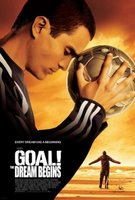
Movie Review: Goal!

Early this year my son Jacob insisted I go to see this movie with him (he'd already seen it with his Mum or auntie or something). We used to go to movies a lot more; now we are more likely to go watch football games. His story now is that I didn't really want to see Goal; that I thought it would be a bit lame and kiddie, but I can't remember that. I do know that after we did see it together I wanted to see it again, and did, several times. Now Jacob owns the video, and I have watched it many times. There's a few things that propelled me into full-blown football tragedy, and I'd have to count this movie as one of them.

It's about football and the lead character begins in poverty. In terms of plot that's all I need to say because anyone familiar with the idea of plot can pretty much write the script from there. The plot has existed for over two thousand years. Yeah, he makes it, yeah, he works it out with his hard-nosed but loving father, and yeah he gets the girl. Of course there are temporary disappointments along the way to punctuate the drama. La la la.

I know the world of cinema is full of experimentation, post-modern crap, 'realism' etcetera. But the thing is this traditional plot structure still works better than anything our post 60s geniuses have managed to come up with.

And within the age-old formula, this movie just works. I've showed it to a few people, and those who will never watch a football game again love it as much as those who love our game.

The lead man (Santiago Munez, played by Kuno Becker) is not all that brilliant, but is a spunk and somehow perfectly adequate - he is supposed to be a nobody who makes it after all. When it comes to performance it is everyone around the lead that make this movie a real treat, from the leading lady (Nurse Emmerson, played by Anna Friel - also a complete hottie) to the smallest bit parts, like the old guy on the bench of an amateur match back in Los Angeles, or the kids kicking a ball around in Newcastle. The detail of casting and direction is beautiful, and makes the movie look like something produced by Brits or Ozzies rather than Yanks.

The secondary blokes all stand out. The ex-scout, Glen Foy (Stephen Dillane) probably deserves the greatest accolades, for a pure, believeable performance with great subtlety and naturalism, but frankly the same can be said of the Newcastle coach and the playboy star player of Newcastle (sorry, don't know the actors' names and they're not on the back of the DVD case). All of the bit parts are exquisite, and I love this sort of detail.

Cameo performances by Zidane, Beckham, Raul and the entire Newcastle team are fun too, but don't dominate the proceedings.

The movie reflects, quite consciously I think, the drama and virtue, as well as some of the irony, of our game. The Spanish is subtitled, while the bulk of the action in England is peppered with accents from all over the world, as is appropriate enough. Meanwhile the main setting represents well (I think - I've never been there) the highly idiosyncratic texture of the 'Toon', 'where the Jordies live'. All this background stuff is just lovely and warm and fun.

Goal also has a brilliant sound track, which I'm sure is one of the reasons it is so re-watchable, beautifully spliced in among the scenes. I have to say this because it's true, but do it now with an uncomfortable knot in my keyboard after discovering that Noal Gallagher, the lead singer of Oasis, who provides most of the music, is a complete twat.

If you haven't seen Goal, whether you are a tragic or not, just go and get it from the video shop. It has a pretty much rock-solid guarantee of entertaining. Brilliant for kids, and for kids into football it contains some pretty good advice for young players as well as just straight inspiration. Nine out of ten.

Labels:

Tuesday, October 10, 2006

John Cleese's View

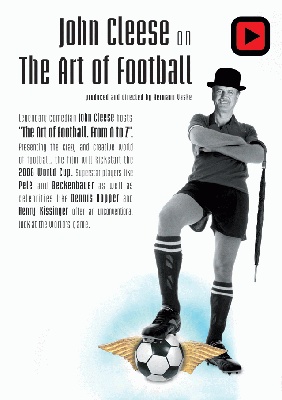
DVD Review: John Cleese on The Art of Football From A to Z, Directed by Hermann Vaske, Studio Hamburg, 2006.

I've naively enquired before about books and videos about football. My regular bookshop, Avid Reader (an excellent shop incidentally) had two books about football (Sheilas, Wogs and Poofters, and Les Murray's By the Balls), both of which I bought (nearly finished the second). But yesterday I checked out the sports section in Borders, and discovered how expensive this obsession could actually be. It's got a great selection of books and videos, and I purchased The Art of Football as well as a book, Bill Murray's The World's Game - A History of Soccer. Next Monday I'm starting work in Archives Fine Books around the corner, so I hope I don't get into trouble for linking these others. Mind you, Archives is a massive and truly glorious second hand bookstore and is barely in competition with these others. It also has a good football section, which I will no doubt get around to browsing fully. Moving along...

I watched The Art of Football last night. It's not a must-see ok? But it is a lot of fun all the same, and the brilliant and snappy snippets of football footage throughout are worth the experience on their own.

John Cleese is not at his funniest, but I'm certain he didn't write the script. Probably the funniest section is 'M for Monte Python', where they replay a game from Monte Python's Flying Circus. But there was certainly a few other belly laughs.

There's something about this film that doesn't quite work for any particular audience. It would be a perfect introduction to football for kids, with the slapstick comedy and simple structure, yet would fail them with all the subtitled interviews. For a more sophisticated audience, the device of multiple, wide-ranging voices is challenging and interesting but the A to Z structure is a bit too forced and some of the humour is just... um... laughable.

There's my honest overall impression, but I need to get to the positives because they are many, and frankly if you're as tragic as me you'll want to see this movie anyway.

The interviews, with Platini, Henry, Ballack, Kaka, Pele, many other players, various artists, musicians and directors as well as politicians Archbishop Desmond Tutu and Henry Kissinger are beautifully spliced together for each section, to give not a viewpoint of the game, but a snapshot of the full controversy, about referees for example (T for trainer) or (O for) the Off-side rule. I have no complaints about the content itself - it's really exciting.

Two outstanding sections are 'W for Women' and 'X for Xenophobia'. The footage of women's games (and interviews with various female internationals - embarassingly I can't remember their names) is inspiring and appears to confirm my suspicions about the future of the woman's game. The xenophobia section is self-consciously a statement, powerful and unambiguous, with Thierry Henry featuring in particular.

There is some light hearted jibing at America. "The wonderful thing about football is how creative it is and this is why it's never caught on in America..." The reason I mention this is that apart from where Cleese specifically refers to some of the idiosyncracies of American football, most of the anti-American comments refer just as well to Australia. At least we're trying to get over the use of the word 'soccer'.

All up, despite my negative comments about the production qualities of the film, there is a lot of fun in The Art of Football, and plenty of good content to interest pretty much everyone. There's probably no need to buy it as I did. But if you like football, it's definitely worth a borrow on a quiet Saturday afternoon.

Cheers.

Labels:

Thursday, October 05, 2006

Oz Football Bloggery Review

When I began this blog, I did so in the honest but naive belief that there just wasn't any ongoing football bloggery going on, and hence I determined to fill the space, however unqualified I was. I even gave myself the following sunset clause:
I do not think I'm the person for this job. If the Soccer Squirrel got going again or someone was to direct me to a good Australian football blog, I'll probably abandon this project, but meanwhile, I'll have a go.
Well good blogs there are, as I have since discovered. This has been a delight, and a wonderful source of learning to boot, but at the same time I've abandoned my sunset clause. I'm staying, despite the other good blogs.

Partly this is because I appear to be the only Roar supporter keeping a blog. But also, perhaps it's relevant to chronicle the journey of a brand new tragic. This is the blog of the utter non-expert. My game analyses are impressionistic, uneducated, and usually a little tipsy. Perhaps it is indulgent, but then, if the only relevant perspective was that of the expert, we wouldn't have a growing football culture in our country. Here we have the equivalent of pub talk. Take it or leave it.

So let's check these blogs out. I believe in independent bloggery. I (now) know Fox Sport has a very active blog, as do the Fairfax papers SMH (Flog) and The Age (Balls Up). These are important, as with the mainstream media outlets in general, as these have better access to primary sources than we do, and a certain discipline which can be relied upon. By independent however I mean not attached to any revenue base or editorial restraints. In politics I think the blogging world is very important, to ask the questions, make the speculations and draw the conclusions that the MSM simply are unable to make. And football, obviously, is far more important than politics.

Apparently there was a bit of a rash of football bloggery during the World Cup. I simply wasn't following it, which is a good indication of how recently I have been 'infected' (as Les Murray terms football tragedy). The Soccer Squirrel remains a good example of an apparently great blog, with several contributors and a mandate to be, "The best opinion based soccer blog which focuses on current issues within the world game. There is a specific focus on the development of the game in Australia, the A-League and the Socceroos." It, along with other blogs, apparently ceased to be attended soon after the World Cup. If it doesn't come alive soon, the link will be disappearing from my sidebar.

Who knows what happened to "A League of Their Own"? With the brief, "A less than serious look at the all-new Australian football league, possibly the only competition in the world that has a frisbee for a trophy. Part of the Real Life News blog community" it sounds great. The evidence for its existence is there, but there is now no such url.

But there are surviving bloggers. Happily just this evening I note the resurgence of Vando's Aussie World Cup & A-League Blog, which had lain dormant since the World Cup. If it is true that my blog had anything to do with Vando coming back to the fray, then I have done good there. Sure he's light, discursive and opinionated. Brilliant stuff! Bring it on! Buy the man another drink to loosen his tongue further!

There's a couple of other blogs which I'll just mention fairly quickly. Keks looked pretty good, and its author had at least begun with a commitment to following the A-League, but it does seem to be in languish since the WC, and it took almost two weeks for my comment to be moderated. It was moderated however, so there's someone there. Hello Keks? Come on mate. Maybe you've moved to another platform?

Like Keks, Owatalk is not just football. Football is just a main (if not the main) category. Wes is the author, and he's interested in other sports, including Christianity. I simply can't complain because I've been known to go on about politics, a far more dangerous sport than either rugby or religion.

Just yesterday I discovered Round Ball Footy, quite by accident, which has an explicit Socceroos focus but apparently is alive! There was a post about a week ago, the first since the 27th July! Hopefully with a bit of socceroo action coming up, we'll be hearing again from Philos and his mates.

I've left the three blogs which have really helped me, and which, without meaning to slight anyone else, I want to most greatly recommend, 'till last.

Confessions of an A-League Junkie, by James Brown, is always worth a look. I hope he doesn't mind me saying that his style reminds me a little of me, except with about seven oceans more knowledge of the game. He gives us regular reports, reviews, commentary on (football) politics as well as play, and he maintains an excellent list of football links. James is regular, and answers comments with friendliness and courtesy. He directly encouraged and helped yours truly in fact, in my search for blogs. At the same time, he humbly noted his 'jealousy' of the following two blogs, which in my mind (and I suspect James's) are genuine treasures for anyone in Australia who wish to follow football.

I mean it. Between Tony Tannous's The Round Ball Analyst and Mike Salter's The Football Tragic, we have an independent football resource to be very proud of. They are better - in my view by a country mile - than any football journalism the mainstream has to offer. In comments on their own blogs I'm sure I've thanked them so much that they're getting bored with it, but at this stage, novice tragic as I am, I am in debt to these two gents and call them both sensei.

For detailed, considered analysis of the games, apparently without fear or favour (maybe just a little bias toward Victory, but given their success rate, who can say it's bias?) Tony is the best bar none. If Tony is poached as a football journalist for a major newspaper at some stage, it will not surprise me. (Actually I'd say the same for Mike, but for different strengths.)

Tony's is not a daily effort. The regular features, which appear to go back to the beginning of the A-League, are a 'Round Up' after each round, and a 'Team of the Week' after each round. Browsing his archives I note that Tony does have the odd post on the Socceroos, and he certainly covered the World Cup when it was on, but these two regular segments are the features we can rely upon. The Round Ups are the best post-game analysis I can find anywhere, and for me (as a learner in early stages) his fantasy 'Team of the Weeks' are a most excellent introduction to the players with their strengths and weaknesses, with an obviously deep and intimate knowledge of their histories. Invaluable stuff. Just invaluable.

Having commented a little on his site I can also report that Tony is friendly in reply and has been encouraging to me as a newbie. If I have a criticism of his site, I think there's something just a tad arrogant about having no links to other blogs and resources. Bloggery, in my humble opinion (and I've had much more to do with bloggery than football) has a strength in community. But maybe Tony has aspirations to be more? A budding professional football journalist? Maybe he should be indeed.

Mike Salter of The Football Tragic might also aspire to be a professional football journalist, and clearly has some media background as well as connections in the industry. If so (to either Mike or Tony) good luck!

I've outlined Tony's strengths with unabashed flattery, and I meant every word, but Mike, apart from being obsessively regular (generally daily), has a much broader and more courageous sweep in his subject matter. It is impossible to review the content with justice, so I'll just touch on a few of his areas. Mike's is the only blog of which I have gone through and read every post and every comment. It was worth it.

Mike's player reviews (eg David Carney, Tony Vidmar), generally reflecting on the moment in their career but always very informed, are excellent. He covers international as well as Australian players.

Cliché Central, (Part 1, Brief Update and Part 2), and other journalism about sport journalism (eg Let's Get Physical) is excellent. Mike is a self-confessed 'football journalism tragic' as well as a 'football tragic'.

On football journalism, of commentators, Mike does not like Craig Foster, apparently since the latter's initial criticism of Sydney coach Terry Butcher, and most recently in Floundering Fozzie - Update. I'm just not qualified to get involved in this controversy, but having watched Sydney play a few times now, I'm inclined to think Mike's home-bias is colouring his defence of Butcher. It doesn't make the discussion any less entertaining, or even informative, however, and after Sydney's last result, maybe the Butcher-critics (including myself) are due for a diet of their own words.

When it comes to the rules, of which he speaks a fair bit, Mike is bold in recommending changes, which I find especially fascinating. Have a look at Rethinking the Restart Part 1 and Part 2 for an excellent example of this. The Penalty Curse, Part 1, Part 2 and Part 3 is also challenging and bold stuff. Once again from my newbie perspective, extremely educational as well. Love it.

Mike's analytical reach is broad, including on occasion women's football and local games in Sydney, but also reaching to the scandals at the highest levels of international soccer. He's critical of the Blatter regime at FIFA, and indeed the whole sordid network. Most recently, With Friends Like These... gives us an insight into one of the mates, Jack Warner. His Places at the Table series is the best intro I've encountered on how the different confederation's places in the World Cup are determined, practically and politically. It is also a good example of Mike's broad watching view of football media in general. I am not exagerating when I say Mike is an incredibly important source for all aspects of the game.

Mike also attracts some intelligent and helpful commentary. 'Magnum' stands out in this regard. The football blogging world is far from mature in this respect in my view. In sport as in politics, we get closer to the truth of the matter in the midst of dialogue than we do from a particular expert.

If I'm just far too gushing, especially of Mike and Tony, it is the awe of a novice speaking. Perhaps as I get wiser in the world of football I will see the edges better and will become more guarded and critical, but I'm not looking forward to that. I'm learning from these guys, and really loving it.

As a final thought, there's some niches that definitely need filling. In terms of the A-League, explicit supporters from Perth, Adelaide, Newcastle, Gosford and Auckland would be very welcome I reckon.

Far more gaping however is the need for a dedicated follower of the Matildas. The Matildas are not, in my view, destined to merely be a second-best competition, as in tennis and swimming. We know the women's league is growing and that the Matildas are doing very well, but this is not my point. The nature of football is such that just because the women may not be able to (on average) lob kicks as far up the field, do aerial combat so high, or be as physical with one another, does not mean they'll play a lesser brand of football. On the contrary, these are exactly the things the purists call for less of. Quite plausibly, the women will ultimately be producing a more beautiful game than the men. Food for thought there.

Cheers, and good night.

Labels:

Tuesday, September 26, 2006

Football hope in The Age

Here's some great stuff from The Age today. Two stories which well illustrate the way football can change our society for the better. Just scouting around The Age's website, it seems the Fairfax press is giving soccer a decent go. Better than Murdoch's Courier Mail that's for sure. I'll find some time to have a better look at their blog, Balls Up, later on. I've added it to my links.

Re: The second story, I'll try to catch Offside as soon as I can, and will review it for Football Down Under. As time goes on, when I get hard-up for things to write about, I will get around to belated reviews of Goal! and Bend it Like Beckham as well. I know I keep revealing my ignorance all over the place, but if anyone can tell me of other good football movies, I'd appreciate it.

Cheers.

Soccer lends a helping hand to the homeless
Clare Nullis, Cape Town
September 26, 2006

NEARLY 500 drug addicts, alcoholics, orphans and vagrants have kicked off the Homeless World Cup soccer tournament in Cape Town, celebrating an annual event designed to help society's most marginalised make a new start in life.

South African President Thabo Mbeki and thousands of spectators saluted the flag-waving teams from 48 nations as diverse as Afghanistan, Australia, Scotland, Sweden, the US, Liberia and Zimbabwe as they paraded through Cape Town.

"We really can help change the world, end poverty and homelessness," said organiser Mel Young. "All we have to do is take a little round ball and start kicking it around."

The idea for the street soccer tournament was born in Cape Town in 2001 after an international meeting of editors of street newspapers such as The Big Issue, which is sold by the homeless in Britain, Australia, Namibia and South Africa.

Melbourne will host the event in 2008 at Federation Square, with State Government funding of $500,000.

The rationale behind the event is to instil a sense of pride — and discipline — in the players through being part of a team and help them overcome problems in their lives.

Research published by the organisers said one year after the last Homeless World Cup, in the Scottish capital Edinburgh, 94 per cent of players had new motivation for life, 62 per cent were coping better with alcohol and drug dependency, 40 per cent had improved their housing situation, 38 per cent had regular employment and 28 per cent had opted for more education.

Tracey Ford, a 34-year-old Australian, was homeless for four years after losing her house as a result of drug addiction. She then started as a street paper vendor, trained with Street Socceroos in Melbourne and took part in the 2005 contest.

"I was literally in the gutter and felt depressed, suicidal and at the end of my life," she said. "The Homeless World Cup made me ecstatic, proud. I wanted to tell everyone, tell the whole world. My old life doesn't exist any more because of this."

Ms Ford recently moved into a small home, has reconciled with her children and started part-time work in a laundrette and nearly finished her drug rehabilitation program.

The tournament was endorsed by big names such as former Beatle Ringo Star, Manchester United boss Sir Alex Ferguson and Portuguese soccer great Luis Figo. It was kicked off by Eusebio, a Mozambican-born Portuguese soccer legend.

But despite the big names, it was the little people who were set to take centre stage at the tournament.

People such as Sada Uzumakunda, who lost her home and her family in the 1994 genocide in Rwanda and ended up as an alcoholic street girl. Or Tula Pilar Ferreira, a Brazilian mother of three who outplayed many men to qualify for the Brazilian squad. And Daniel Martinez, whose world fell apart when his father died and who found his new "home" by qualifying for the US squad.

"The atmosphere is brilliant. Everything is brilliant," declared Nicky Meta. "It's like a dream come true."

"It's a great experience. There's nothing like it," beamed Adam Banda, who is recovering from substance abuse.

Each team is sponsored by organisations and companies in their country and some teams have links with soccer teams.

AP


A mirror under the veil - and inside the stadium
By Jake Wilson
September 26, 2006

"I didn't realise I was making a comedy," says the director Jafar Panahi of his new film, set around a football match between Iran and Bahrain during the lead-up to the 2006 World Cup.

Still, as Panahi went about developing the script of Offside, it became hard to ignore the absurdity of the predicament faced by his central characters, a group of Iranian women who have traded their veils for caps and boys' shirts in the hope of being admitted to the all-male event.

Eventually these unlikely rebels, each drawn to the game for her own reasons, find themselves stuck in a holding pen outside the stadium, where a guard explains that women are not permitted to enter in case they are harmed by the foul language of the crowd. "We promise not to listen," one of them responds.

Later, another of the women begs to be escorted inside so she can go to the toilet, but permission is granted only after she agrees to mask herself by attaching a poster of star player Ali Karimi to her face.

Though barely glimpsed on screen, the football match provides a model for the film's narrative: a clear time limit, a struggle between opposing teams, and unpredictable action that spills in all directions around a single central location.

The tension between documentary immediacy and a set of strictly defined formal parameters is a hallmark of Panahi's cinema. So, too, is an overtly expressed anger at the restrictions that Iranian society imposes particularly, but not exclusively, on women.

I spoke to Panahi, a grave yet lively man in his mid-40s, during his brief visit to Australia for this year's Melbourne Film Festival. Answering questions through an interpreter, he stressed the social purpose behind his films - his desire "to go to the streets and portray the events of the day" using "real issues, real people, real locations".

With this in mind, I asked Panahi about his early film The Mirror (1998), an apparently realistic story about a young girl walking through Tehran that takes a surprising turn halfway through, when the lead actress announces that she's tired of her role and sets off home for real.

On a first viewing, The Mirror appeared to be a parable about the deceptive nature of cinema, demonstrating that even the most innocent-looking film story is a carefully constructed illusion.

But surprisingly, Panahi turned this interpretation on its head. Rather than underlining the distinction between art and reality, he intended to suggest that "reality and the imagination are intertwined, they are very similar" and that Iranian cinema itself is like a mirror. "When I see my picture, the picture resembles me."

Panahi's frankness about oppression has made it impossible for him to screen his films in Iran, but even so he is the first to admit that the reflection of society in his work is less than complete. If the battles he shows are fought exclusively out of doors, in the public space of the city, this isn't entirely by choice.

"I have vowed not to tell lies to myself at least," he said. "In Iran you cannot show a woman without the veil, and if you show inside a house where women are living, or even in bed, you have to show in the film as if they have veils, and this is a lie."

Though the ending of Offside depends on the unscripted outcome of the Iran-Bahrain match itself, Panahi said that this project had been germinating in his mind for many years - since 1998, when the Iranian football team returned home in triumph after a match against Australia.

Fans were told to assemble at the football stadium to greet their heroes, and when Panahi and his family went to the stadium to experience the mood of the nation, they were told that 5000 women had forced themselves inside.

"This was reported by the print media, and of course the question was posed why women are not allowed to watch the game," he said. "After the World Cup, the issue died down and no report of that appeared again."

A few years later, however, Panahi's mind returned to the subject after an incident that may have inspired the film's optimistic ending. In 2002, Iran was once again preparing for the World Cup.

"Right away I wanted to go and watch the practice game, and my 11-year-old daughter said that she would like to come with me," said Panahi. "At the stadium entrance, I insisted on bringing my daughter with me, but they didn't allow me.

"And I was there, and 10 minutes later she was there. I said 'How did you come in?' And she said 'Ultimately, a way can be found.' "

Offside opens on Thursday.

Labels: ,